Use AI to Build a Personalized Meal Plan on a Budget
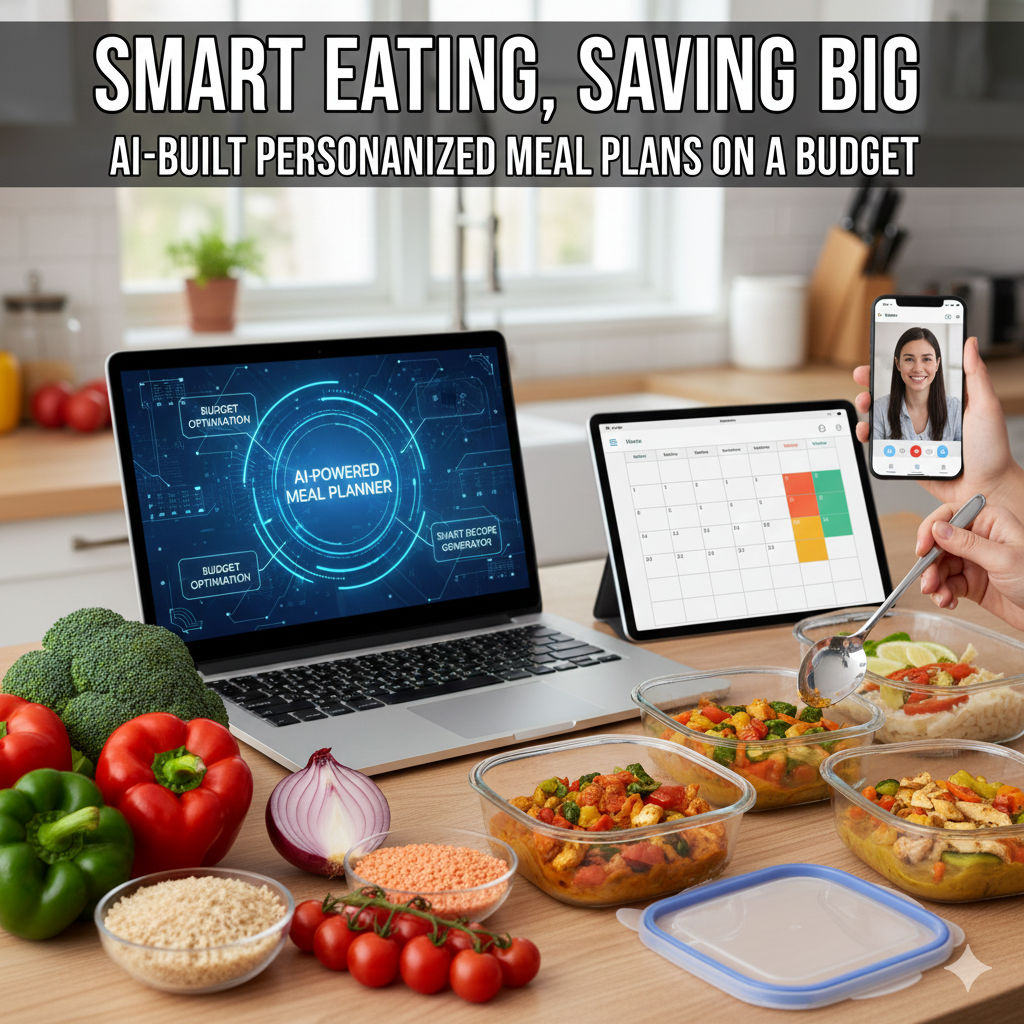
Use AI to Build a Personalized Meal Plan on a Budget
Keyword: ai meal plan budget
Intent: Practical / Wellness
Eating healthy shouldn’t feel like a luxury, yet for many people—students, young professionals, families, or anyone trying to manage rising food costs—meal planning often becomes a stressful balancing act. You try to stay within a budget, find time to cook, choose nutritious ingredients, and avoid eating the same thing every day. And on top of that, you have to think about dietary restrictions, preferences, leftovers, work schedules, and unpredictable cravings.
It’s no surprise that most people end up saying:
“I’ll plan it later” — and then end up stretching the same two or three meals all week.
But here’s the good news: AI can now do the heavy lifting for you.
Instead of spending hours searching recipes, calculating grocery costs, or worrying about whether your plan fits your dietary needs, AI can generate a customized meal plan that matches your:
Budget
Nutrition goals
Cooking skills
Time availability
Dietary restrictions
Ingredient preferences
Local grocery prices
And you can do it in minutes — not hours.
This article breaks down how to use AI to build a personalized, affordable meal plan, the tools you need, how to reduce waste, and how to stretch ingredients without sacrificing taste or nutrition.
Let’s dive in.
Why Meal Planning Feels Hard — And How AI Solves It
Before jumping into the “how,” it’s important to understand why meal planning often fails:
1. Too many decisions
“What should I cook today?” becomes a daily stress trigger.
AI reduces decision fatigue by giving you ready-made plans.
2. Lack of time
Meal planning takes time. Grocery shopping takes time. Cooking takes time.
AI speeds up planning and makes grocery lists automatically.
3. Budget concerns
Healthy meals are often assumed to be expensive.
AI can prioritize lower-cost ingredients, compare price options, and reuse items creatively.
4. Nutrition confusion
Macros? Calories? Fiber? Protein? Overwhelm is real.
AI can balance nutrients without you needing a degree in nutrition science.
5. Repetition fatigue
You get tired of eating the same dishes.
AI can generate diverse recipes that still fit your budget and taste preferences.
In short:
AI makes meal planning easier, cheaper, healthier, and far more personalized than traditional methods.
Step 1: Identify Your Meal Planning Goals
AI gives the best results when you give it the right inputs.
Here are the main things to define before generating your plan:
✔ Your weekly food budget
Examples:
“₹800 per week”
“$50 for groceries”
“I need meals under ₹100 per serving”
✔ Your cooking skill level
Examples:
Beginner
Comfortable with simple recipes
Skilled / enjoy experimenting
✔ Time availability
Examples:
“I can cook 30 minutes daily”
“I need meal prep meals for the whole week”
“I only cook dinner”
✔ Dietary needs
Examples:
Vegetarian
Vegan
High-protein
Gluten-free
Diabetic-friendly
Weight loss focused
Muscle gain focused
✔ Ingredients you love and hate
Tell the AI what to avoid:
“Please avoid mushrooms, paneer, seafood.”
Tell the AI what you want more of:
“Use oats, eggs, bananas, lentils, and chicken frequently.”
Once you clarify these, AI can create a plan that feels like it was designed by someone who understands your life—not a generic meal plan pulled from a website.
Step 2: Use the Right AI Tools for Meal Planning
There are several AI platforms that help you build budget-friendly meal plans.
1. ChatGPT (best for full customized plans)
Perfect for generating weekly plans, grocery lists, and recipes tailored to your budget.
2. Forks Meal Planner AI
Great for plant-based diets.
3. MyFitnessPal with AI Suggestions
Ideal for tracking calories and macros.
4. Whisk (AI recipe generator + grocery integration)
You can save recipes, generate shopping lists, and even connect to stores.
5. Cronometer AI
Excellent for nutrition-focused planning with detailed nutrient tracking.
6. Mealime (AI-assisted simple meal plans)
Best for quick, minimal-effort recipes.
7. Yummly AI
Smart recommendations based on your preferences.
You don’t need all of these. Even one—like ChatGPT—can handle nearly everything for a budget-conscious user.
Step 3: Ask AI to Generate a Budget-Friendly Meal Plan
Here’s an example prompt you can copy:
Budget Meal Plan AI Prompt (copy/paste)
“Create a 7-day meal plan for one person with a ₹1200 weekly budget. Meals should be simple, high in protein, and take under 20 minutes to cook. Avoid seafood and mushrooms. Prioritize ingredients like eggs, oats, yogurt, rice, lentils, potatoes, and seasonal vegetables. Include breakfast, lunch, dinner, and two snacks each day. Provide a grocery list organized by category.”
This is where the magic happens.
AI can now create:
✔ A weekly schedule
✔ Recipes
✔ Portion sizes
✔ Price estimates
✔ Substitutions
✔ A grocery list
All tailored to your exact budget.
Step 4: Make the Most Out of Your Grocery Money — AI Style
AI isn't just good for planning the meals. It's great for reducing waste and stretching ingredients further.
Here’s how.
1. Reuse ingredients creatively
AI can generate recipes based on ingredients you want to finish before they spoil:
Example prompt:
“I have leftover rice, spinach, tomatoes, and two eggs. Give me 4 quick recipes under ₹50 per serving.”
This ensures nothing goes into the dustbin.
2. Compare prices
If you mention your city or store, AI can help you pick cheaper alternatives:
“Suggest more affordable substitutes for chicken and berries in Mumbai.”
AI might recommend:
Replace chicken with lentils or soybean
Replace berries with bananas or apples
Replace almond milk with regular milk
3. Plan meals with overlapping ingredients
AI can build meal plans where:
Rice appears in 3–4 meals
Eggs are used in breakfast + dinner
Vegetables are reused across soups, curries, and stir-fries
This saves money and time.
4. Generate low-cost, high-nutrition recipes
Examples:
Lentil soup
Chickpea salad
Veggie fried rice
Egg curry
Peanut butter oats
Banana smoothies
Dal khichdi
Chickpea wraps
You can ask:
“Give me 10 healthy recipes under ₹40 per serving.”
5. AI portion control prevents overspending
AI can calculate exact quantities you need:
“How much rice should I buy for 7 lunches and 7 dinners for one person?”
This avoids overbuying (a common budget mistake).
Step 5: Use AI to Meal Prep Efficiently
If you prefer cooking once or twice a week, AI can design a batch-cooking plan.
Example prompt:
“Create a weekly meal prep plan where I cook twice a week, meals cost under ₹90 each, and total prep time is under 2 hours.”
AI will generate:
✔ A cooking schedule
✔ Big-batch recipes
✔ Storage instructions
✔ Reheat instructions
✔ Ingredient overlaps
This is especially useful for busy students, employees, or families.
Sample Budget Meal Plan (AI-Generated Format)
Below is a realistic example of what a simple, budget-focused week might look like.
🌱 7-Day Budget Meal Plan (₹1200/week)
Day 1
Breakfast: Oats with banana + peanuts
Lunch: Rice + dal + sautéed spinach
Snack: Apple
Dinner: Egg curry + roti
Snack: Yogurt
Day 2
Breakfast: Scrambled eggs + toast
Lunch: Veg fried rice
Snack: Chana chaat
Dinner: Potato and peas curry
Snack: Fruit
Day 3
Breakfast: Smoothie (banana + milk + oats)
Lunch: Khichdi
Snack: Nuts
Dinner: Tomato omelette (veg)
Snack: Curd
Day 4
Breakfast: Peanut butter oats
Lunch: Rajma + rice
Snack: Banana
Dinner: Stir-fried vegetables + boiled egg
Snack: Roasted makhana
Day 5
Breakfast: Veg upma
Lunch: Leftover rajma wrap
Snack: Fruit
Dinner: Egg bhurji + roti
Snack: Mixed seeds
Day 6
Breakfast: Besan chilla
Lunch: Chole + rice
Snack: Peanuts
Dinner: Veg pulao
Snack: Yogurt
Day 7
Breakfast: Aloo paratha (low oil)
Lunch: Dal tadka + rice
Snack: Apple
Dinner: Veg soup + boil egg
Snack: Banana
Total cost: ₹1100–₹1200 approx.
Grocery List Breakdown (AI Style)
Grains
Rice
Oats
Wheat flour
Proteins
Eggs
Lentils (toor, moong, chana)
Chickpeas / kidney beans
Peanuts
Vegetables
Potatoes
Spinach
Tomatoes
Onions
Carrots
Seasonal veggies (cheapest option)
Fruits
Apples
Bananas
Others
Milk
Spices
Oil
AI can generate this list instantly, customized each week.
Advanced Ways to Use AI for Meal Planning
Here are extra features people often don’t realize they can use:
✔ Convert recipes into low-budget versions
“Make this pasta dish cheaper but keep it tasty and healthy.”
✔ Create meals with specific macros
“Give me meals with 30g protein each under ₹100.”
✔ Generate weekly shopping lists with exact quantities
“How much dal should I buy for 7 servings?”
✔ Replace expensive ingredients in any recipe
“Make this smoothie without almond milk or berries.”
✔ Plan meals based on local seasonal produce
“Create a summer meal plan using only seasonal vegetables in India.”
✔ Log calories automatically
AI can estimate calories for each meal without manual tracking.
Why AI Meal Planning Saves Money (Backed by Real Logic)
Here’s why using AI to plan meals is often cheaper than doing it manually:
Fewer impulse purchases
Less food waste
Smart ingredient reuse
Better portion control
Cheaper alternatives suggested
Built-in calorie and macro tracking
Faster planning = fewer last-minute orders
Less temptation to eat out
By combining tech and wellness, you create a system that is both cost-efficient and health-focused.
Final Thoughts: AI Makes Healthy Eating Accessible
Using AI for meal planning isn’t about being “techy.”
It’s about removing stress from everyday life.
It helps you:
Eat healthier
Spend less
Plan faster
Reduce waste
Enjoy cooking
Stay consistent
In a world filled with rising costs and constant busyness, AI becomes your quiet helper—organizing your meals, saving you money, and supporting your wellness goals without judgment or complication.
Healthy eating shouldn’t be expensive or overwhelming.
With AI, it finally doesn’t have to be.
Discover Premium Tools & Resources
Unlock exclusive access to premium productivity tools, trending resources, and expert recommendations curated just for you.